ServicesDrying and Dehumidifying
Drying and Dehumidifying in Ettrick
Once the standing water is gone, the real drying starts. We place air movers and dehumidifiers where the moisture actually is, check readings every day and explain what the numbers mean, so you know exactly when your home is dry.
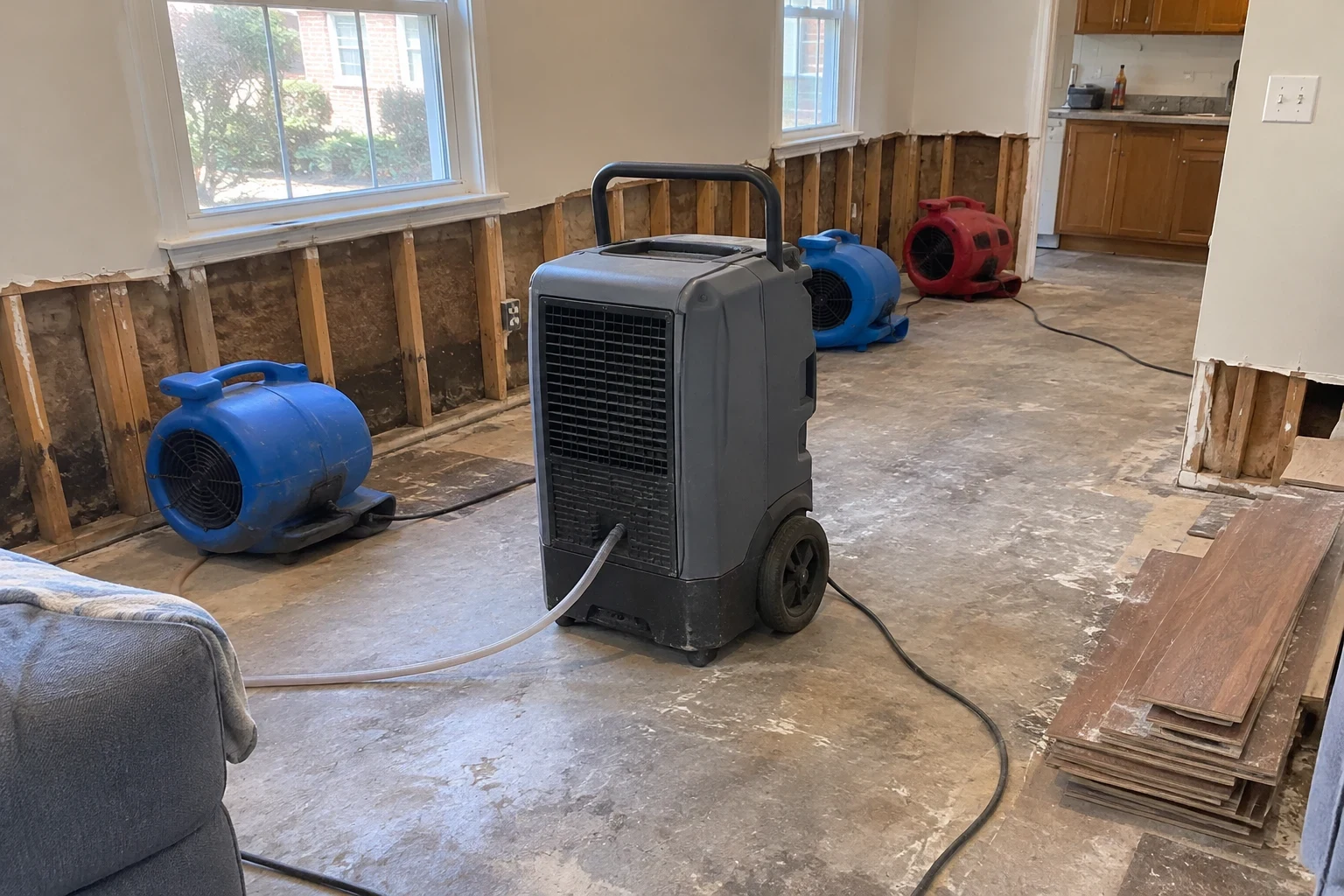
What drying and dehumidifying actually does
Water doesn't stay on the surface. It wicks up drywall, soaks into the bottom plate of your walls, and settles into subfloor and insulation. A floor can feel dry to your hand while the wood under it is still holding enough moisture to warp, smell or grow mold within a few days.
Drying and dehumidifying is the step that pulls that hidden water out. Air movers push moisture out of wet materials and into the air, and dehumidifiers capture it from the air and send it down a drain line. We measure as we go and stop only when the wet areas read close to the dry parts of your home.
It usually follows water extraction, and it is what keeps a leak from turning into a mold remediation job later. In a humid Virginia summer, air that is already damp can't do this on its own, which is why open windows and box fans rarely finish the work.
What's included when we dry your home
Moisture mapping
We use moisture meters and a thermal camera to find where water traveled, including behind cabinets and under flooring. You get a simple sketch of the wet areas so you can see what we see.
Air movers placed with a plan
Fans go at angles along wet walls and floors to keep air moving across the surface. Placement matters more than the number of units.
Commercial dehumidifiers
Refrigerant dehumidifiers handle most homes. In cooler spaces or with dense materials like hardwood, we may bring a desiccant unit that keeps working where others slow down.
Wall cavity and floor drying
When water is trapped inside a wall, we may pull baseboards or drill small holes near the floor to vent the cavity. Hardwood can get drying mats that draw water up through the boards, which often saves floors that look ruined.
Daily readings you can read
We check every marked spot each visit and log the numbers. We walk you through what changed and what's left.
Crawl space drying
Wet crawl spaces feed moisture up into the floors above. We dry the framing and the space itself so the problem doesn't return from below.
Signs your home still needs drying
A musty smell that lingers
An earthy or sour odor days after a leak usually means something is still wet. It is often the first warning before mold shows.
Swollen trim or cupping floors
Baseboards that separate from the wall or floorboards with raised edges are holding water. Caught early, many can still dry back down.
Soft or stained drywall
Bubbling paint, a tide line or a spot that gives when you press it means water is still in the wall.
Damp air and foggy windows
If rooms feel sticky or windows sweat after the water is gone, the moisture has moved into the air and needs to be removed.
Water sat more than a day
Anything wet for over 24 to 48 hours is at risk of mold. Even if it looks fine now, it is worth getting readings.
How a drying job runs, start to finish
- 1
Inspection and readings
We arrive, find the source if it's still active and take readings across the affected rooms and the dry ones nearby. The dry readings become the goal we're drying toward.
- 2
Setup and explanation
We set equipment, run drain lines and tape off anything you shouldn't trip over. Before we leave, we tell you which units must stay on and which outlets they use.
- 3
Daily checks
We come back each day to read the meters, move equipment as areas dry and adjust as needed. Most homes take several days, depending on materials and how long the water sat.
- 4
Final readings and next steps
When the numbers match the dry areas, we pull the equipment and show you the log. If anything needs replacing, we explain your options for repairs and rebuild.
What affects the cost of drying
There's no flat rate for drying because no two leaks spread the same way. The price comes down to how much material is wet and how long it takes to dry. We explain each line before work starts and keep a daily record that also helps with your insurance claim.
- Size of the wet area
- One room under a sink needs far less equipment than water that spread across a floor and down into a crawl space.
- What got wet
- Hardwood, plaster and subfloor dry slower than carpet pad or drywall. Dense materials mean more days of equipment.
- How long the water sat
- Water caught quickly is mostly on the surface. Water left for days has soaked deeper and may need wall cavity drying or removal of materials.
- Access to the space
- Tight crawl spaces, finished basements and cabinets that must be opened add setup time.
- Days of equipment
- Each day the air movers and dehumidifiers run is part of the cost, which is why careful placement early on saves money.
Drying and dehumidifying questions
Something not covered here? (804) 531-5577
Can't I just open the windows and run some fans?
For a small spill on tile, that may be enough. For water that reached drywall, subfloor or carpet pad, household fans dry the surface while the inside stays wet. In humid weather, open windows can even add moisture. Readings are the only way to know for sure.
How long will the equipment be in my home?
Most jobs run several days. Carpet and drywall caught early dry faster, while hardwood and plaster take longer. We give you an honest estimate after the first readings and update it each visit.
Can we stay in the house while it dries?
Most families do. The equipment is noisy and makes rooms warm, and we'll mark off any areas to avoid. If the water involved sewage, that's a different situation, and we'll talk it through with you.
Why do you need to drill holes in my walls?
Water trapped inside a wall can't dry with air blowing on the paint. Small holes near the floor, usually hidden behind the baseboard, let air into the cavity. It's often the step that saves the wall from being cut out.
Will my insurance pay for drying?
Sudden leaks like a burst pipe are often covered, but your policy decides that, not us. We work with most major insurance companies and share our daily moisture logs and photos so your adjuster can see what was done and why.
Will the dehumidifiers raise my power bill?
They draw steady power while they run, so you may notice a bump. We size the equipment to the job so nothing runs longer than it needs to.
Find out what's still wet
If you've had a leak and aren't sure it's dried out, we'll come take readings and explain what we find. We're on site in 60 mins or less, and the inspection costs you nothing.