ServicesSewage Cleanup
Sewage Cleanup in Ettrick
When sewage backs up into your home, it is a health problem first and a water problem second. We get the waste out, disinfect what can be saved, remove what can't and tell you in plain terms what each step is for before we do it.
What sewage cleanup is and when you need it
Restoration crews sort water into three categories. Clean water comes from a supply line. Gray water comes from a washer or dishwasher. Sewage is Category 3, often called black water, and it carries bacteria and viruses that soak into anything porous. That is why sewage cleanup follows stricter rules than an ordinary leak.
If water came up through a floor drain, a toilet or a tub, or it smells like a sewer, treat it as sewage until someone checks. Keep kids and pets away, avoid walking through it and turn off the HVAC system if it pulls air from the affected area so you don't spread odor and contaminants through the house.
We are available 24/7 for sewage backups and are on site in 60 mins or less. Once we arrive, we walk you through what we see and what each option means, so you are never guessing about what happens to your home.
What the work includes
- Safe removal of waste and water
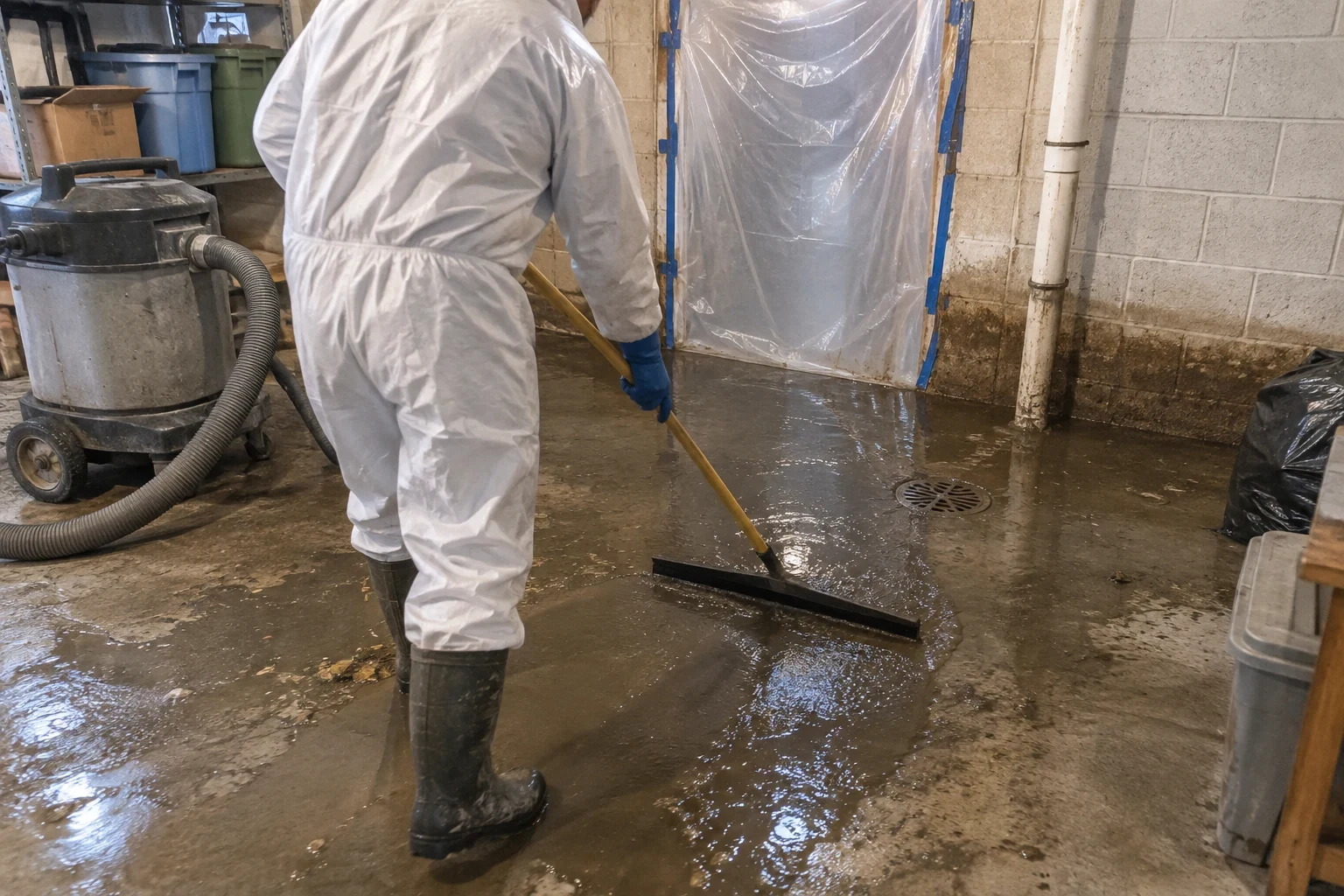
- Our crew suits up in protective gear and pumps out the standing sewage and solids. Waste is bagged and hauled away so none of it gets carried into the clean rooms of your home.
- Containment of the affected area
- Plastic barriers go up around the damaged rooms, and we set our air equipment so it pushes air out of the space rather than into the rest of the house. That way the cleanup stays in one place instead of spreading.
- Removal of porous materials
- Carpet, pad and drywall that sewage touched usually can't be made safe again. We cut drywall a set distance above the water line, and we photograph what comes out so you have a record for your insurance company.
- Cleaning and disinfecting
- Concrete, tile, framing and other hard surfaces get scrubbed and treated with an antimicrobial. We tell you which products we use and what each one does.
- Drying and odor control
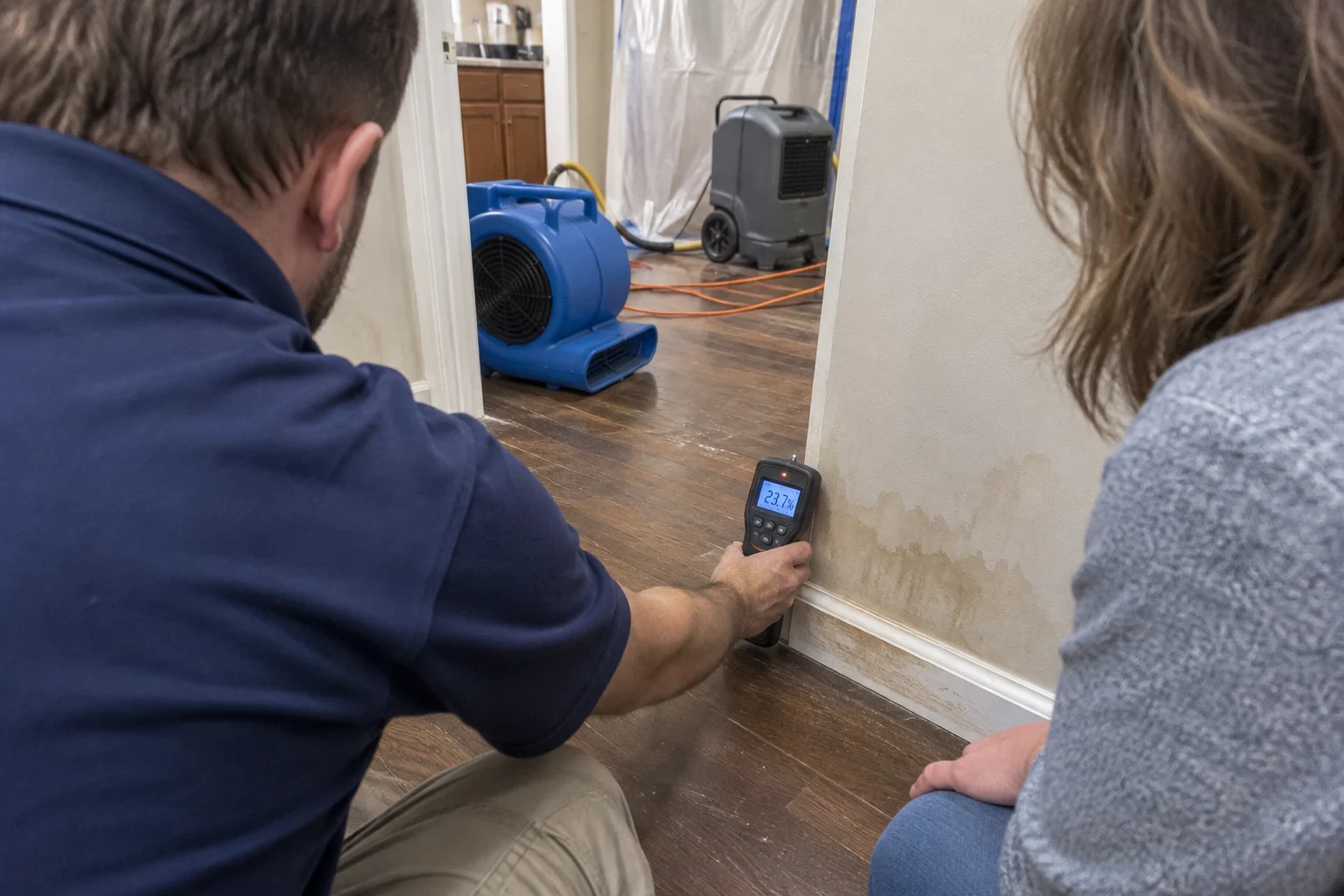
- With cleaning done, we bring in air movers and dehumidifiers and track moisture readings until the structure is dry. Our drying and dehumidifying work keeps mold from taking hold after the sewage is gone.
Signs you are dealing with a sewage problem
Water rising from a floor drain
A basement or laundry drain that pushes water up instead of taking it down usually points to a blocked or overloaded sewer line.
Gurgling toilets and slow drains
When several fixtures drain slowly or gurgle at once, the main line is struggling. A backup often follows.
A sewer smell that won't fade
A persistent rotten-egg or sewer odor near drains, under a bathroom or in a crawl space can mean a hidden leak from a waste line.
Dark or discolored water
Brown or gray water with debris, especially after heavy rain overloads sewer lines, should be handled as contaminated.
Stains below a bathroom
Spotting on a ceiling or wall under a toilet can be a failing wax ring or drain pipe slowly soaking the materials.
What affects the cost of sewage cleanup
No two backups look alike, so we set the price once we have seen the damage in person. Before any work begins, we walk you through what is pushing the cost up or down. We work with most major insurance companies and can help you understand the claim paperwork, but the coverage decision belongs to your insurer.
How far the water spread
Sewage that stayed on one bathroom floor is a much smaller job than sewage that crossed a finished basement. The more floor it covered, the more labor, equipment and waste hauling the job needs.
What it soaked into
Once sewage touches carpet, pad, drywall or insulation, those materials come out. The more porous material involved, the more there is to remove now and replace later.
How long it sat
When sewage sits for a day or longer, it climbs higher into drywall and sinks deeper into wood. That means more cutting, more cleaning and a longer drying stretch.
Access and drying time
Crawl spaces and cramped basements slow the crew down. Dense materials like hardwood or thick subfloor can also keep the drying equipment running for extra days.
How a sewage cleanup day runs
- 1
Your phone call
Tell us where the water is and where it came from. We'll give you a few safety steps to take while our crew heads over.
- 2
Inspection and a plain explanation
We check how far the water traveled, take moisture readings and photos, and explain what must be removed and what can be cleaned. You agree to the plan before work starts.
- 3
Containment and removal
We seal the area, extract the sewage and remove contaminated carpet, pad, drywall and insulation.
- 4
Disinfecting and drying
Every remaining surface is cleaned and treated, then drying equipment runs while we check progress with moisture meters on each visit.
- 5
Final check and next steps
Once readings show dry, we walk you through the results. If walls or floors need replacing, our repairs and rebuild service puts the space back together.
Sewage cleanup questions
Can I clean up a small sewage backup myself?
If a toilet overflowed a little onto a tile floor, you can usually wipe it up yourself wearing gloves and using a strong disinfectant. The picture changes when sewage reaches carpet, drywall or a wider area, because it seeps into places you can't scrub. At that point professional removal and drying are worth it, and we'll be straight with you about which case you're facing.
Does homeowners insurance cover sewage backup?
That comes down to your specific policy. Many policies only cover sewer backup if you added a separate endorsement. We work with most major insurance companies and supply photos and documentation for your claim, but your insurer makes the final call on coverage.
Is it safe to stay in the house during cleanup?
Usually, yes, as long as the work area is sealed and everyone keeps out of it. If sewage reached the rooms you live in, or someone in your home is very young, elderly or has a weakened immune system, a few nights elsewhere may be the better choice. We'll help you weigh it.
Can my carpet be saved after sewage gets on it?
Most of the time, it can't. The pad underneath holds contamination like a sponge, and industry standards call for removing any carpet and pad that sewage reached. Some area rugs can go out for professional cleaning, and we'll flag anything that is worth the try.
How long does sewage cleanup take?
Getting the waste out and disinfecting usually takes a day or two. Drying then runs several more days, depending on the materials and how long the sewage sat. After the inspection, we'll give you a timeline you can plan around.
Sewage in your home? We can be there fast.
We serve Ettrick, Petersburg, Colonial Heights, Chester and nearby towns. Tell us what happened and we'll explain your options in plain terms.