ServicesWater Extraction
Water Extraction in Ettrick, VA
Every hour water sits on your floors, it soaks deeper into carpet pad, subfloor and drywall. We bring pumps and extractors, pull out the standing and soaked-in water, and tell you in plain words what we found and what comes next.
What water extraction is, and when you need it
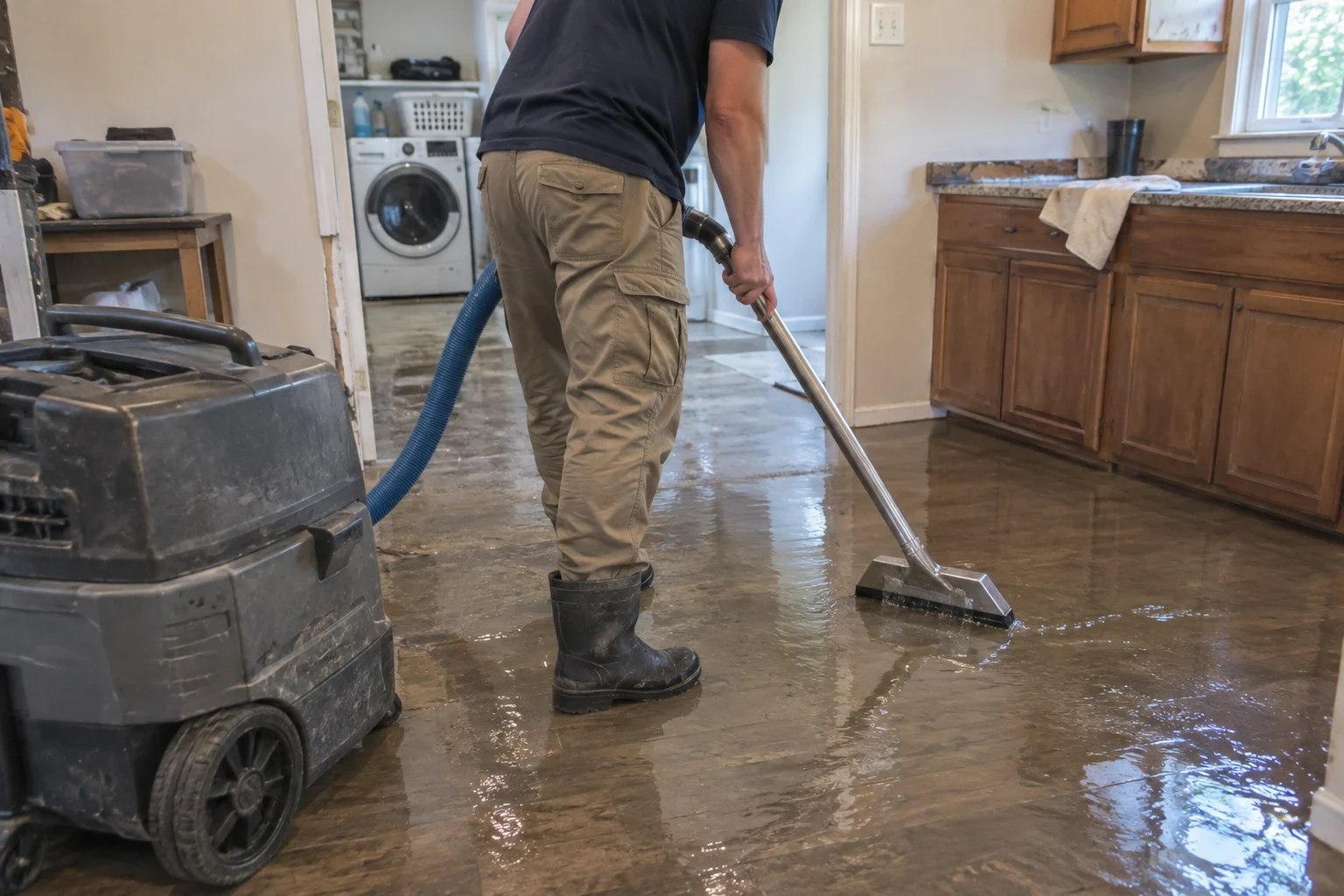
Water extraction is the first step after a leak or flood. It means physically removing the water before any drying starts. Fans and dehumidifiers can't do this part on their own. A soaked carpet and pad hold far more water than you can see, and air alone would take days to pull it out. Extraction removes most of it in hours, which shortens drying and lowers the chance of mold.
It's the right call any time water is standing, squishes underfoot or has run under the baseboards. That covers burst supply lines, overflowing tubs, a failed water heater, and storm water that finds its way into a basement or crawl space during a summer downpour.
We explain your options as we go. Before anything is cut or carried out, you'll know which materials we can save, which ones we can't, and why.
What the work includes
- Standing water removal
- For deep water in a basement or crawl space, we use submersible pumps. Shallower water on finished floors comes up with powered extraction wands.
- Carpet and pad extraction
- Weighted extraction tools press water out of the carpet and the pad beneath it. When the water was clean, the carpet itself can often be saved. Soaked pad usually can't, and we'll tell you that up front rather than after the fact.
- Moisture mapping and photos
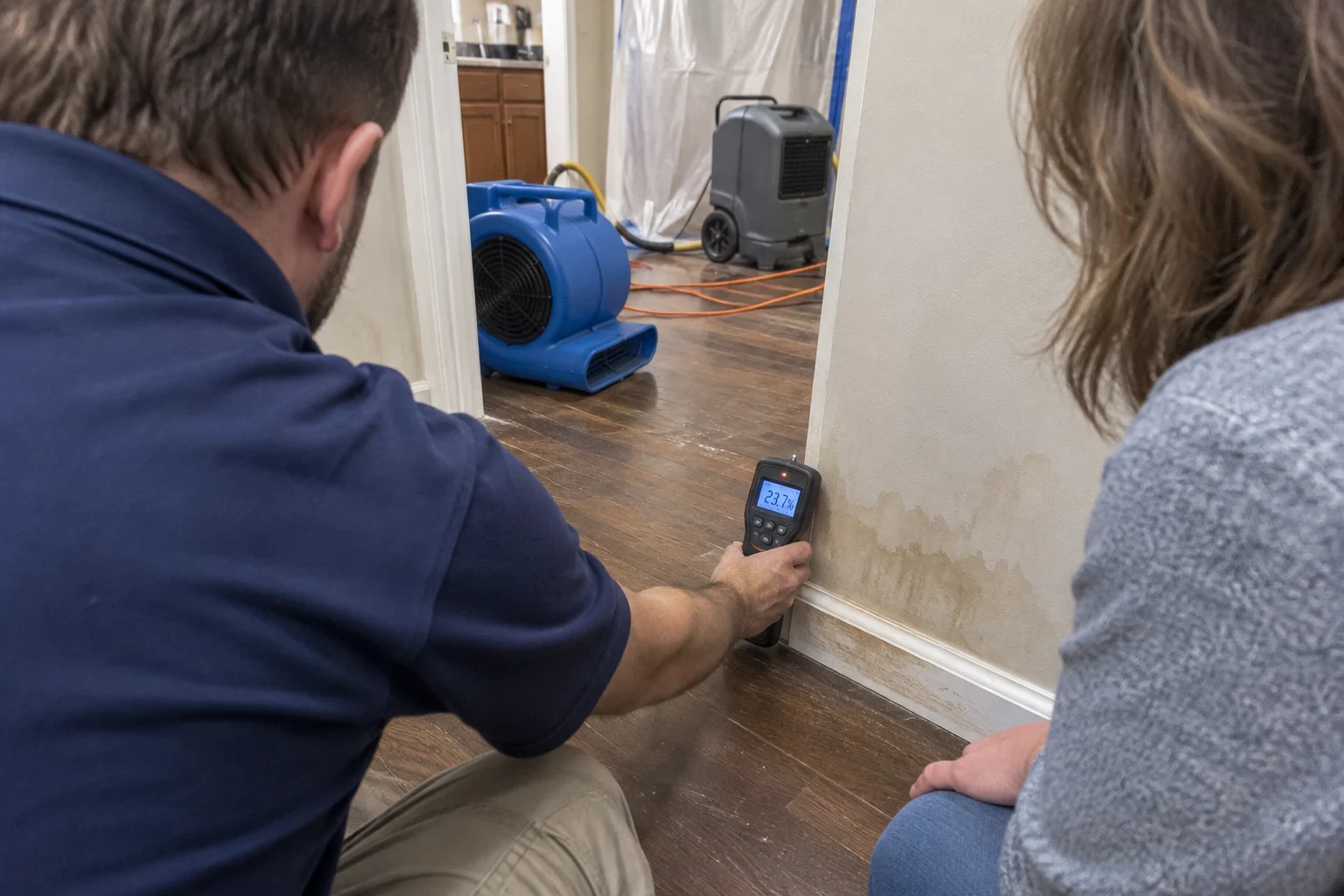
- Water travels under flooring and wicks up drywall. We use moisture meters and a thermal camera to trace where it went, including under cabinets and behind baseboards. You get photos of what we found, which also helps with an insurance claim.
- Hardwood, vinyl and tile
- Hard floors look dry long before they are. We extract from the surface and the seams, then check for water trapped underneath that can cause hardwood to cup or tiles to loosen.
- Moving and protecting your things
- We lift furniture onto blocks or move it out of the wet area so legs don't stain the carpet and wood doesn't soak up more water. Boxes and keepsakes go somewhere dry.
- Setting up the dry-out
- Once the water is out, we set up air movers and dehumidifiers. Our Drying and Dehumidifying page explains how that stage works and how we track it.
Signs you need water extraction
Water you can see
Any standing water on the floor, even a thin film across a room, needs to come out with equipment, not towels.
Carpet that squishes or feels cold
If carpet feels damp or cool underfoot, the pad underneath is likely holding water you can't see.
Swollen baseboards or stained drywall
Baseboards that are puffy, or drywall with a dark line near the floor, mean water has wicked into the wall.
A musty smell after a leak
That smell usually means something is still wet. Left alone for a couple of days, it can lead to mold, which we cover on our Mold Remediation page.
Floors that cup or lift
Hardwood edges rising or vinyl and tile coming loose point to water trapped below the surface.
How a water extraction visit goes
- 1
Your phone call
We ask where the water is coming from and help you shut it off if it's still running. We'll also ask about outlets or cords near the water so everyone stays safe. Our offer is on site in 60 mins or less.
- 2
A walkthrough you can follow
We walk the affected rooms with you, take moisture readings and photos, and explain what we see. You hear which materials can likely be saved before any work starts.
- 3
Pulling the water out
Pumps handle the deep water first, then extraction wands and weighted tools work through carpet, pad and hard floors. We move furniture and protect belongings as we go.
- 4
Recheck and next steps
We take new readings to confirm what is still wet, set up drying equipment and tell you how often we'll be back to check progress. If walls or floors need replacing later, our Repairs and Rebuild work picks up from there.
What affects the cost of water extraction
Every job is priced on what we actually find in your home, and we walk you through the reasons before work begins. If you're filing a claim, the photos and moisture readings we take on the first visit become a clear record of the damage. We work with most major insurance companies. Your adjuster still decides what the policy covers.
- How much water and how far it spread
- One wet bathroom is a short job. Water that crossed several rooms or ran down into a basement takes more equipment and time.
- What kind of water it is
- Clean water from a supply line is the simplest. Water from a washing machine or dishwasher needs more care, and anything from a toilet or sewer line falls under our Sewage Cleanup service.
- The materials that got wet
- Carpet with pad, hardwood and finished basements each take different tools and time to extract properly.
- How long the water sat
- Water that stood for a day or more soaks deeper into subfloor and walls, which adds work.
- Getting to the water
- Tight crawl spaces and below-grade basements take longer to work in than an open first floor.
Water extraction questions
Something not covered here? (804) 531-5577
Can I just use a shop vac?
A shop vac helps with a small puddle on tile. It can't pull water out of carpet pad, subfloor or the bottom of drywall, and that hidden water is what causes mold and warped floors. If more than a small spot got wet, it's worth having the area checked with a moisture meter.
Will my insurance cover water extraction?
It depends on where the water came from. Policies tend to treat an abrupt event, such as a pipe that bursts, differently from a leak that dripped for months or water that rose in from outside, which is often left out. We work with most major insurance companies, and our photos and moisture readings give your adjuster a clear record of where the water spread and how wet things got. The adjuster decides what your policy pays for.
Can my carpet be saved?
Often, yes, if the water was clean and we get to it quickly. The pad underneath is usually replaced because it holds water and dries poorly. If the water came from a sewer backup, the carpet should go, and we'll explain why.
What should I do before you arrive?
Shut off the water if you can and stay clear of any outlets or cords near the water. Lift small items, rugs and anything valuable off the floor. Take a few photos for your insurance, then leave the heavy work to us.
How long does extraction take?
Most extraction is done in a few hours, depending on how much water there is and how many rooms it reached. Drying afterward usually takes several days, and we check on it during that time.
Get the water out before it spreads
The sooner water comes up, the more of your floors and walls we can save. We serve Ettrick, Chester, Colonial Heights and nearby towns, and we'll explain every step in plain terms.