ServicesFlood Cleanup
Flood Cleanup in Ettrick, VA
When water comes in from outside, it brings mud and bacteria with it. We pump it out, remove what can't be saved, clean and sanitize what can, and dry your home so it's ready for repairs. Before we start each step, we explain what it is and why.
Flood cleanup explained, and how it differs from a leak
We call it flood cleanup when water gets into your home from the outside. A creek might spill over its banks, storm runoff might push in under a door, or groundwater might rise into a basement or crawlspace. On its way in, that water ran across lawns, streets and ditches, so the industry treats it as contaminated, the same way it treats sewage. Water from a burst pipe is a different story, since it starts out clean.
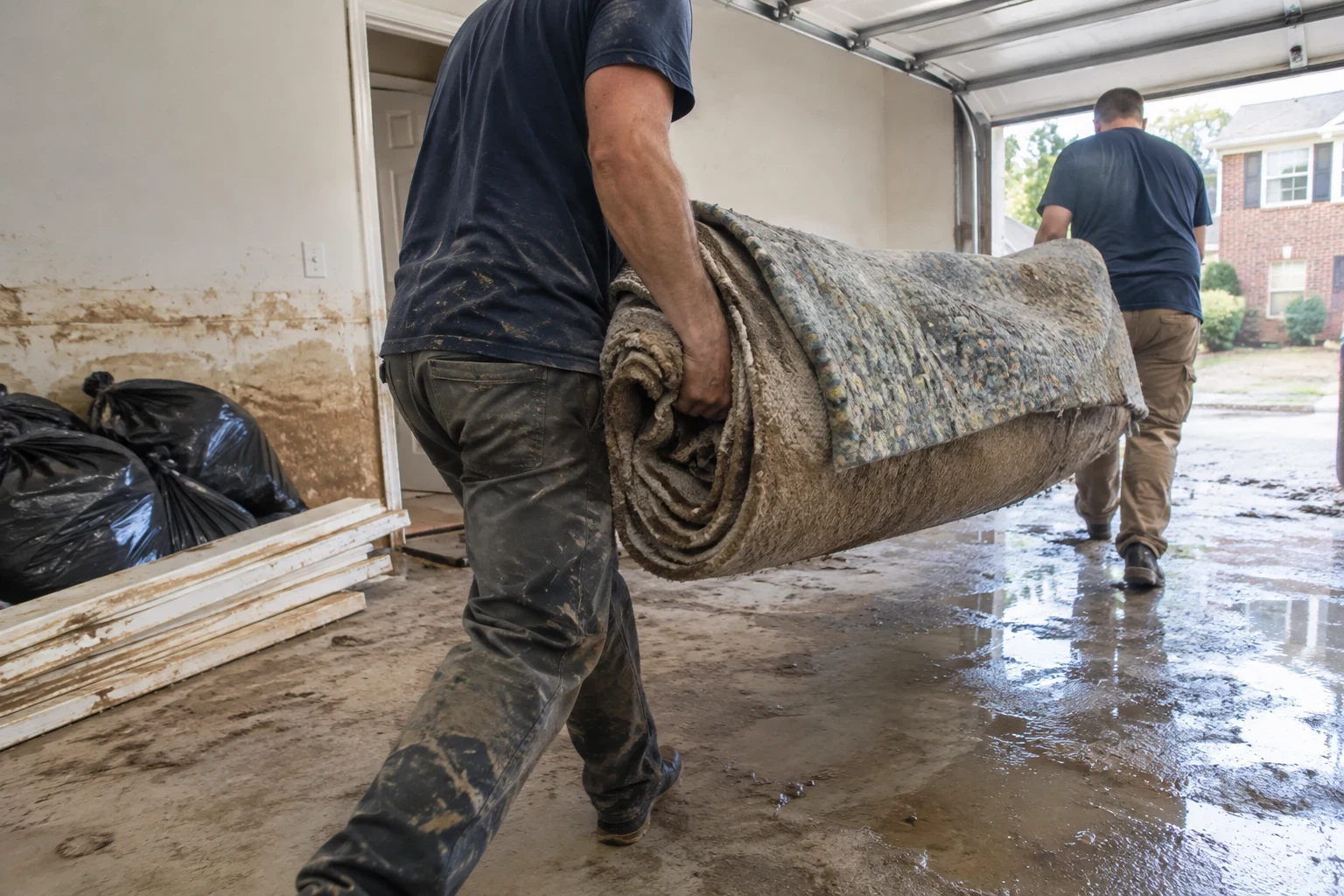
That changes what has to happen. Floodwater soaks into carpet, pad, insulation and the bottom of your drywall in a way that cleaning can't fully undo, so those usually come out. Solid materials such as studs, concrete and tile can be scrubbed, sanitized and dried in place. We walk each room with you and tell you why an item can't stay before anything is hauled away.
Did your water come from a supply line or an appliance instead? Our Water Extraction and Drying and Dehumidifying pages cover that lighter job.
What our flood cleanup covers
- Pumping out standing water
- Submersible pumps handle deep water in basements and crawlspaces. Then extractors pull water from floors and any carpet still in place. The more water we remove early, the shorter the drying.
- Mud and silt removal
- Floods leave a layer of fine silt that holds bacteria and keeps surfaces wet. We shovel, squeegee and rinse it out first, because disinfectant can't work through dirt.
- Removing soaked walls and floors
- Wet drywall gets trimmed off along a level line set a little higher than the water reached, and the damp insulation behind it comes out with it. Soaked carpet and pad go as well. Keeping that line even means new drywall goes up faster later.
- Cleaning and sanitizing
- Studs, subfloors, slabs and framing are scrubbed and treated with an antimicrobial. This step makes the space safe to dry and rebuild.
- Structural drying
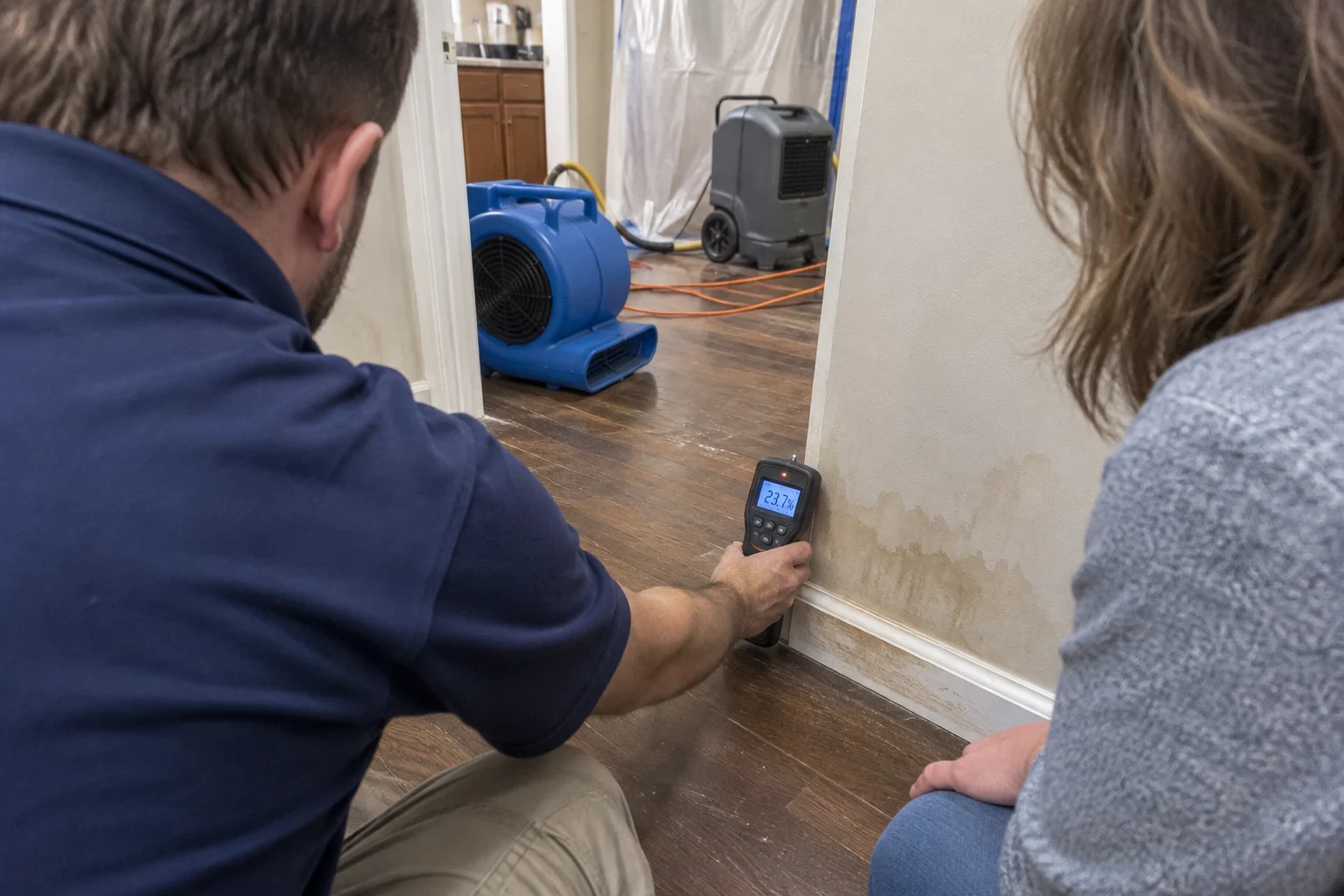
- Air movers and dehumidifiers run until moisture readings in the framing are back to normal. We check with meters, not by touch.
- Sorting your belongings
- We help you separate what can be cleaned from what can't. Anything going out gets photographed first, so you have a record for your claim.
Signs your home needs flood cleanup, not just a mop
A water line on the walls
A tide mark on drywall or baseboards means water sat long enough to wick upward. The wet area inside the wall is often higher than the stain.
Mud or debris indoors
Silt, leaves or grass on the floor tell you the water came from outside. Treat it as contaminated and keep kids and pets away.
Water in the crawlspace
Plenty of homes around Ettrick sit over crawlspaces, and floodwater down there can soak insulation and floor joists without showing upstairs. A musty smell or a soft spot in the floor after a storm is worth a look.
A sour or sewage smell
That odor means the water carried waste, or the sewer line backed up during the storm. It calls for protective gear, and our Sewage Cleanup page covers what that involves.
Carpet that won't stay dry
If carpet still feels damp a day after the water went down, the pad underneath is holding moisture and will start growing mold.
How a flood cleanup day goes
- 1
The phone call
Let us know how the water got in and which rooms it reached. We're on site in 60 mins or less. While you wait, keep out of standing water, and only switch off power to flooded areas if the panel is somewhere you can reach on dry ground.
- 2
A free inspection and a plain plan
We check for electrical and structural hazards, take moisture readings and photograph everything. Then we tell you what has to come out, what can stay and why, before any work starts.
- 3
Water out, mud out, tear-out
Pumps and extractors go first, then silt removal, then flood cuts and removal of soaked materials. Debris is bagged and carried out without passing through the rooms that stayed dry.
- 4
Sanitize and dry
Exposed surfaces are cleaned and treated, then the drying equipment goes in. We return to take readings and reposition equipment until the framing is dry.
- 5
Hand-off to rebuild
Once readings are normal, you get the moisture log and photos. If you'd like, our repairs and rebuild work picks up from there with drywall, flooring and trim.
What affects the cost of flood cleanup
No two floods are alike, so we don't guess at a number over the phone. After the free inspection, you get a written estimate that lists each part of the job. If a line doesn't make sense, ask and we'll explain it.
- How high the water rose
- Two inches of water usually means baseboards and carpet. Two feet means drywall, insulation and sometimes cabinets. Height drives how much has to come out.
- How long it sat
- Water left for a day or more soaks deeper into framing and needs more sanitizing and longer drying.
- Size and access
- A finished basement takes more work than an unfinished one, and a tight crawlspace takes more labor than an open room.
- Mud and belongings
- Heavy silt, plus lots of furniture and boxes to move, sort and document, adds hours to the job.
- Drying time
- Equipment is counted by the days it runs. Dense materials and humid Virginia summers can stretch that out.
Flood cleanup questions
Something not covered here? (804) 531-5577
Does my homeowners insurance cover flood damage?
Often it doesn't. Most standard homeowners policies exclude water that rises from outside, like an overflowing creek or storm runoff, and that falls under separate flood insurance if you carry it. We work with most major insurance companies. Throughout the job we keep a dated photo record and moisture readings you can hand to your adjuster. The adjuster decides what's covered, and we'll help you make sense of anything they ask for.
Can I clean up floodwater myself?
You can start by moving valuables up and out of the way and keeping people out of the water. Wear boots and gloves, and don't run a household vacuum on floodwater. The hard part is drying wall cavities and framing, which takes commercial equipment and meters to confirm it's actually dry.
Why do you have to cut my drywall?
Drywall wicks water upward and floodwater leaves contamination in the paper and gypsum. Cutting above the water line lets us remove the affected part, dry the studs and insulation cavity, and sanitize. Leaving wet drywall in place is how mold starts behind walls, which is a bigger job covered on our Mold Remediation page.
How long until my home is dry?
Many flooded rooms take several days of drying after tear-out, and basements or thick materials can take longer. We take readings on each visit and tell you where things stand. Equipment comes out when the numbers say the framing is dry, not on a set date.
Can we stay in the house during cleanup?
If the flooding was limited to a basement or crawlspace and the power is safe, many families stay put. If living areas flooded or sewage was involved, staying elsewhere for a few days is usually easier. The drying equipment is loud and runs day and night, and we'll be honest about what that's like.
Do you come out at night or on weekends?
Yes. Storms and rising water don't wait for a weekday, so our emergency service runs around the clock. We're on site in 60 mins or less. Before anything gets moved or cut, we walk through your home with you on a free inspection and show you what we found.
Water came in? Let's get it out.
Tell us what you're seeing and we'll send a crew for emergency water damage response. We'll explain what we find in plain terms, and what each option means, before any work begins.