ServicesMold Remediation
Mold Remediation in Ettrick
Mold almost always means water got somewhere it should not be. We find that moisture, contain the growth so spores stay put, remove what is affected and walk you through every choice in plain language before any work starts.
What mold remediation actually means
Remediation is not a spray-and-wipe job. It means stopping the moisture, keeping spores from spreading to the rest of your home while we work, physically removing mold from the surfaces it grows on and drying everything so it does not come back.
Some materials can be cleaned. Hard surfaces like framing lumber, concrete and metal usually can. Porous ones like drywall, insulation and carpet pad usually cannot, because mold roots into them. We will show you which is which in your home and why, so you know what you are paying for.
Small spots on a bathroom ceiling are often something you can handle yourself. Growth larger than a few square feet, mold that keeps returning, or a musty smell with no visible source is when it makes sense to have us look.
What the work includes
- Tracking down the moisture
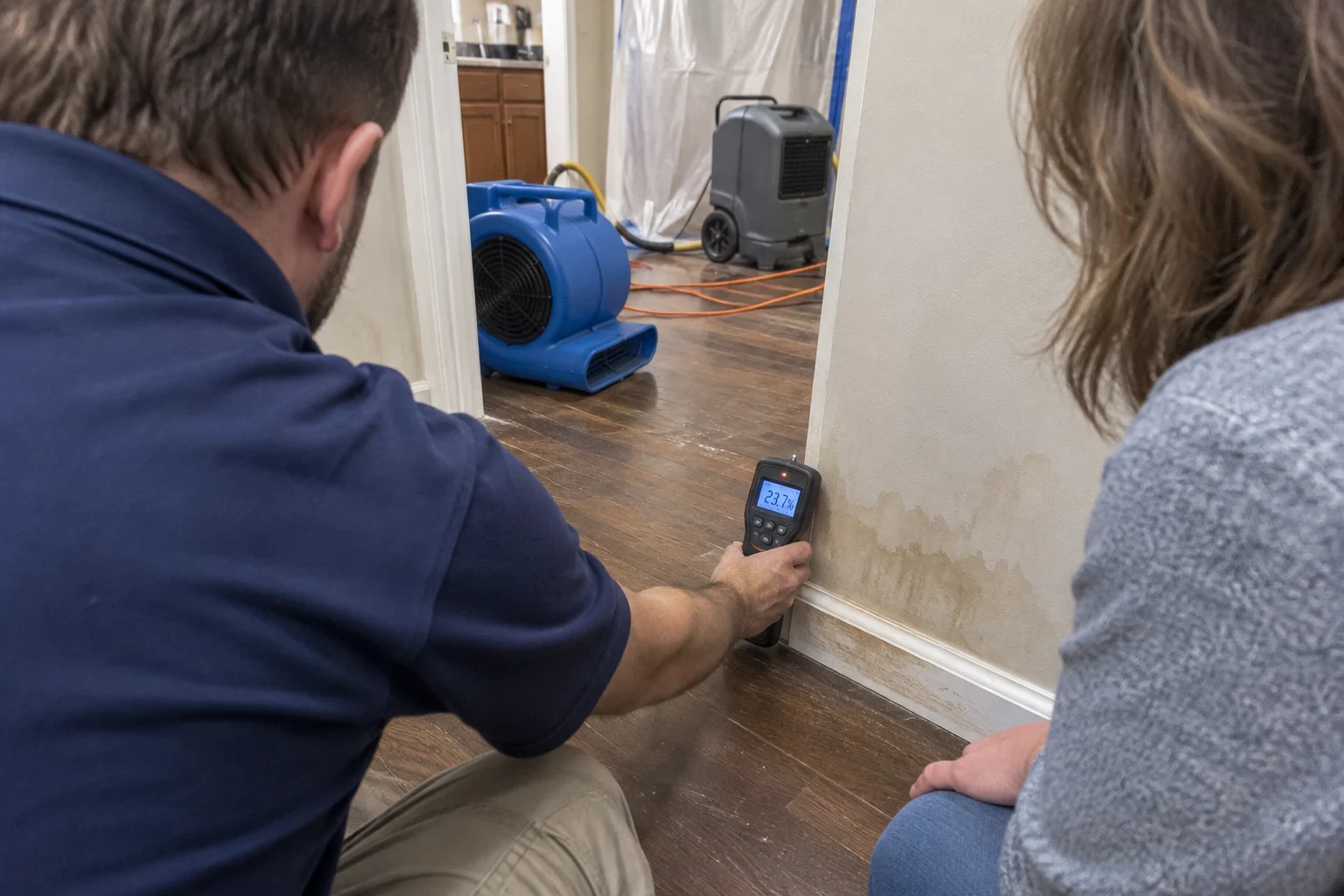
- Moisture meters and thermal imaging show us where the dampness starts and how far it reaches. A slow plumbing drip, a crawl space with no vapor barrier and sweating ductwork each leave a different pattern, and each needs its own fix.
- Containment
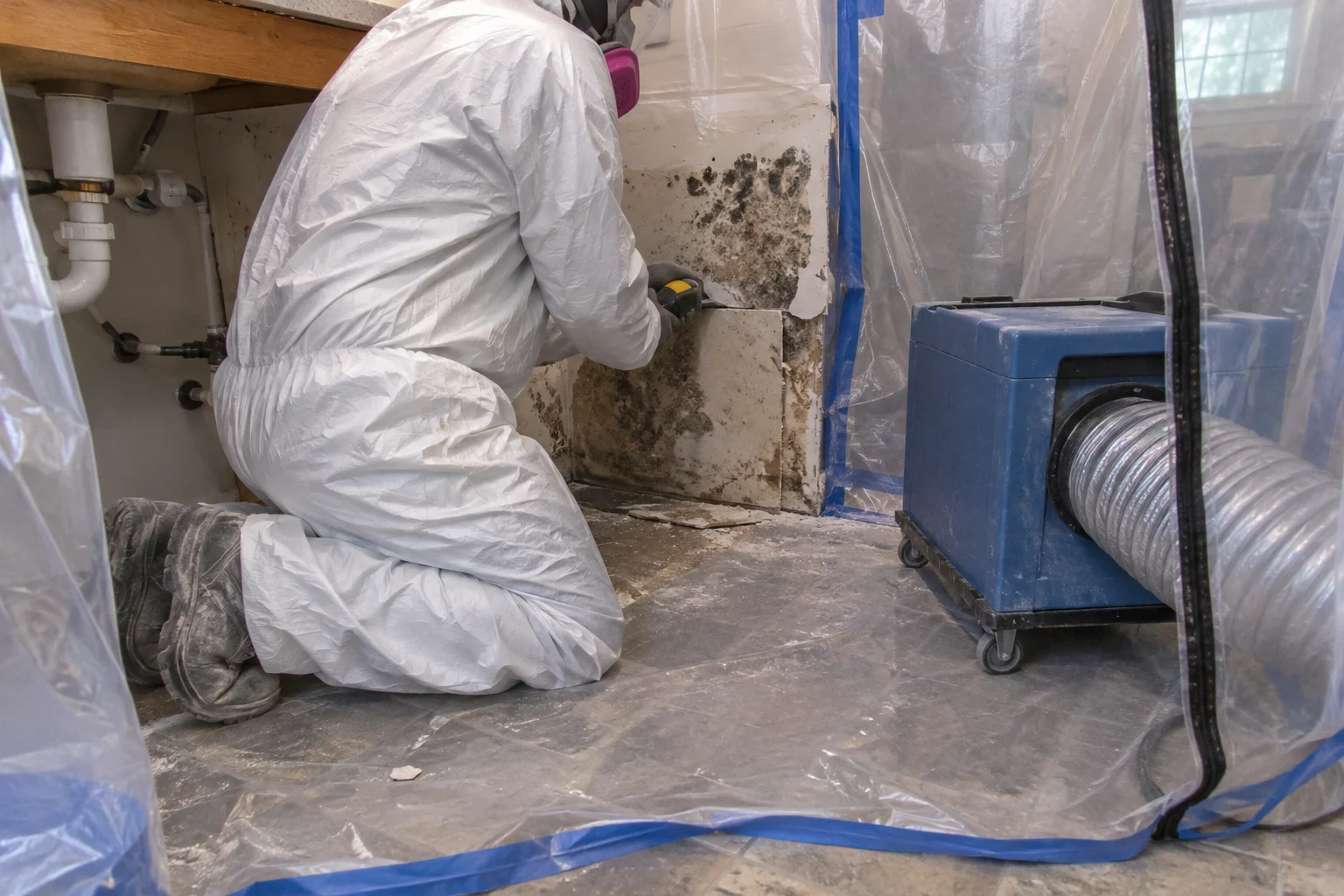
- Plastic sheeting closes off the work area, and HEPA air scrubbers hold that space under negative pressure. Spores we stir up during removal stay inside instead of drifting into the rest of your home.
- Removal of affected materials
- Moldy drywall, insulation and carpet pad are cut out and bagged while still inside the containment. We take out a margin beyond the growth you can see, because mold nearly always runs farther than the visible patch.
- Cleaning what can be saved
- Hard surfaces such as framing and subfloor are HEPA vacuumed, then scrubbed or sanded to clear the growth and wiped down.
- Drying and final check
- Before anything gets closed back up, we bring the area down to normal moisture levels. When walls or floors need rebuilding, our repairs and rebuild crew picks up from there.
How to tell mold may be growing in your home
An earthy odor that will not clear
A stale, damp smell in a closet, basement or crawl space often comes before any growth you can see. It usually points to a spot that never fully dries.
Patches that return after scrubbing
When a spot you cleaned is back within a few weeks, the mold is living inside the material or behind it, not just on the surface.
Stains or bubbling on walls and ceilings
Yellow or brown rings, flaking paint and soft drywall mean moisture is sitting behind the surface. That hidden damp is where mold does best.
An old leak that only got mopped
A burst pipe or appliance leak that was wiped up but never dried with equipment can leave framing and insulation wet inside the wall. Mold can take hold in as little as a couple of days.
Damp crawl space or basement
Long, muggy Virginia summers keep crawl spaces humid. Fuzzy growth on the joists or a sour smell rising through the floor is worth having us check.
What moves the price of a mold job
We do not give a number over the phone for mold, because the price depends on what is behind the wall or under the floor. After we look, you get a written estimate that breaks the work into separate lines, so you can see what each part costs and why it is there.
How far the growth has spread
Mold behind a single bathroom wall needs a small containment, a few hours of labor and a few bags of debris. Growth across an entire crawl space or basement needs much more of all three.
Clean versus cut out
Scrubbing and sanding hard surfaces costs less than removing and replacing drywall, insulation or flooring. The deeper mold has worked into a material, the more of it has to come out.
How hard the area is to reach
An open room is quick to seal off and work in. Low crawl spaces, attics and spots tucked behind cabinets take longer to contain and slow every step after that.
Stopping the moisture
Mold comes back if the leak, missing vapor barrier or poor airflow behind it stays. Correcting that cause is sometimes part of the job and can add to the total.
How a mold job runs
- 1
Free inspection
We look at the affected area, take moisture readings and photos, and explain what we see. You get an honest answer on whether this needs professional work or something you can clean yourself.
- 2
Written plan and estimate
We put down exactly what will be removed, what will be cleaned and what containment we will set up. Nothing starts until you have read it and your questions are answered.
- 3
Containment and removal
On work day we protect the path from your door to the work area, build the containment and start the air scrubbers. Then we remove and clean materials inside the sealed space.
- 4
Drying and cleanup
Dehumidifiers bring the area back to normal moisture levels. We bag and haul away debris, take down the containment and HEPA vacuum the space.
- 5
Walkthrough
We show you the cleaned area, share the before and after photos and explain what will keep the moisture from returning.
Mold remediation questions we hear
Can I just use bleach on it?
On a small spot on tile or a sealed surface, a household cleaner is often fine. On drywall or wood, bleach mostly lightens the stain while the mold underneath keeps growing. It also does nothing about the moisture causing it.
Do I need mold testing first?
Not always. If we can see the growth and find the moisture, testing usually will not change the plan. It can help when you smell mold but cannot find it, or when you want independent confirmation after the work is done, and we will tell you plainly which situation you are in.
Can my family stay home during the work?
In most cases, yes. Containment and negative air pressure keep the work area sealed off from the rest of the house. If anyone has asthma, allergies or a weakened immune system, we will talk through whether staying elsewhere for the work days makes sense.
Will insurance pay for mold removal?
It depends on the cause. Mold from a sudden event like a burst pipe is more often covered than mold from a slow leak or ongoing humidity. We work with most major insurance companies and can explain what we found and send photos, but your adjuster makes the coverage decision.
Will the mold come back?
Mold returns when moisture returns. Removing it is half the job; the other half is fixing the leak, ventilation or humidity problem. We point out what is feeding it so you can keep the area dry going forward.
How long does it take?
A single room is often a day or two of work, plus drying time. Larger areas or crawl spaces take longer. Your estimate will include a realistic timeline.
Seeing or smelling mold in your home
We are on site in 60 mins or less, day or night, for active water problems, and we will happily come out for a free inspection when mold is your worry. You will get a clear explanation of what is there and what your options are.